Radical Hope #6: The Field That Holds Us
Notice a breath…
This one, that is happening now of its own accord.
Follow it out into the space around you. Rest for a moment in the awareness that the carbon dioxide you are breathing out will be breathed in by the leaves of a tree, whether close by or distant. Not eventually, but as soon as the air arrives there. This is not a metaphor. It is the carbon cycle, happening between your body and the world, in this moment.
You and the tree are in a conversation.
Last time we explored the body as a living system — the lived, felt experience of being part of an interconnected whole. The body, I suggested, is your local piece of nature.
This week we follow that thread further out beyond your skin.
Because here is what I am finding: the quality of listening I cultivate inside the body does not stay inside the body. For me, it begins, naturally and without effort, to extend. Into the room. Into the street. Into the patch of sky above the rooftops. Into the more-than-human world that has been patiently waiting for our attention.
The boundary between self and world — so solid, so obvious, so taken for granted — begins, slowly, to become permeable.
This is the sixth blog in a series called From Generative Practice to Radical Hope. I am exploring why deep personal and inner development — somatic, psychological, contemplative — is not a retreat from the polycrisis, but the very ground from which genuine engagement becomes possible. Each step is one I am taking myself.
The Field That Holds Us
For a number of years I used to spend a month each summer on retreat by an isolated lake in the forests of upstate New York. Solitary retreats, mostly. My body-mind would slow, over the weeks, to something one might call nature time.
I remember once sitting in meditation by the edge of the lake and becoming so still that a mouse wandered through the grass close to my feet, taking in the sights and sounds.
But the most profound encounter came one early spring. A Canada goose arrived at the sliding glass doors of the cabin — the doors that looked out over the lake — and laid her eggs there. Apparently, she had decided that close to this particular human was a safe place.
She sat with her eggs throughout my remaining weeks on retreat. I watched her male partner out on the water and learned from naturalists that the gander deliberately avoids looking at the nest — a way of not leading predators to it. So she was there alone, almost constantly, for weeks.
And then one day she looked at me. Not a glance, but a held look. And then she stood, walked to the water, and swam out onto the lake. It felt, in my heart, as though she had left me to guard the eggs.
That is the moment that stays with me — not what came after: I had to leave before the eggs hatched. But that held look. That moment of recognition, of encounter. A goose deciding, on the basis of weeks of shared stillness, that this human could be trusted with the most precious thing she had.
The world responds to the quality of attention we bring to it.
I have another memory that stays with me. I was outside an organisation in Westminster, London, that uses ‘dark money’ to fund British Members of Parliament to deny climate change in Parliament. I was lying on the ground, blocking the road, waiting to be arrested. Above me were the enormous branches of a London Plane tree. Three hundred and fifty years old, at least. As the police arrived and started the process of arrest, a leaf detached from somewhere high above me and began to fall — that slow, unhurried spiral that leaves make when they are ready to let go.
I reached up. It landed in my hand.
Joy went through me like a surge of energy, just as I was being arrested. It was as if the tree had witnessed what I was there for — and offered something back. I know how that sounds. I am not making a metaphysical claim. I am reporting an experience. The quality of attention I had brought to that moment — lying still, waiting to be arrested, not fighting, not fleeing, simply present in an act of witness — seemed to have been met. Reciprocated.
I am not suggesting you seek this out. What the contemplative teacher James Finley calls a moment of the sacred spontaneously unfolding (3) cannot be arranged. It arrives as grace.
What can be cultivated is the quality of presence that makes such moments possible.
And that is built, slowly, through coming back, again and again, to the same place.
Dropping back into a deeper nature
When I bring genuine attention to the natural world — not studying it, not photographing it, not thinking about it, but actually attending to it — something shifts in the quality of the meeting. The world stops being backdrop. I begin to merge with it.
As Anatácio Peralta, an indigenous leader from Brazil, puts it: ‘We are made of nature, we are nature.’ (4)
I am not really beginning to merge. I am dropping back into a deeper nature.
What builds the relationship is not the long holiday in the mountains. It is the regular, unhurried return to the same place. (5)
In How Forests Think, Eduardo Kohn, living with the Runa people of the Upper Amazon, was given this instruction before sleeping in the forest: if a jaguar comes in the night, sleep face up. If you can look back at him, he’ll see you as a self — a you — and leave you alone. If you sleep face down, he’ll see an it. And you’ll become dead meat.
The Runa people do not experience themselves as separate from the forest but as participants within it — attuned to its signs, responsive to its signals, thinking with it rather than about it. (1)
Kohn concludes, after years of living inside that way of being, that seeing, knowing, and even thinking are not exclusively human affairs.
We are not working toward this. We are already inside it. The breath you took at the beginning of this newsletter — the one that is being breathed in by the leaves — was already the relationship. We are simply learning to notice what has always been true.
Here is where I have arrived. Perhaps you will come too.
A PRACTICE
‘Go beyond small to the place where no message is being given. Start there. Let small be the first of the pleasures to come.’
Steve Paxton (2)
I often meditate with eyes open — using sight, sound and feeling together to bring me present, so that what I see and hear around me, the whole environment, becomes part of the practice.
Find a piece of nature you love — or begin to find one — and return to it. Not once. Often. Several times a week if you can, daily if possible. Bring to it the same quality of unhurried, curious attention we explored last week in the body: centred, open, present. Not studying. Not photographing. Simply attending.
Let familiarity deepen into connection.
For me, living in Totnes beside the tidal Dart, that place is a stretch of river next to the salt marsh — a quiet sheet of grasses surrounded by trees and a steep hill, that floods twice daily, swelling higher on full moons or when Dartmoor rain pushes downstream. I have been watching the tides with an app, learning how the river and the marshes are making sense of the pull of the moon on the water. My Aikido teacher, Jeremy Weiss — a traditional land-management expert — names the hedge species as we drive through one-track lanes: hawthorn, hazel, spindle, blackthorn, dog rose, field maple. These hedges rise in thick, woven banks of red earth and moss, some tracing boundaries first laid out thousands of years ago by prehistoric farming communities. Through these hedges, he reads the land. Through returning to the river, I am learning to do the same.
You don’t need a river. A park bench. A particular tree. A window with sky in it. The place matters less than the return, and the listening, watching and paying attention as you build your relationship with this place.
And then take it back with you. Into the street. Into the city. Because cities are nature too — nature organised by a particular kind of mind, but nature nonetheless. The pigeon on the kerb. The plane tree pushing through the pavement. The sky above the buildings. The rain on tarmac. All of it alive. All of it participating. All of it available to the quality of attention you have been cultivating.
The practice is not a retreat from the world. It is learning to see the world you are already inside.
Next time: Who Are You? Have you noticed that when you pay attention to nature, there is a great mystery happening — called 'paying attention'? What is paying attention? What is awareness? What is the space in which everything arises? Last week we attended to the body. This week, to nature outside our skin. Next week we discover that awareness can inhabit many levels of identity — this ego, this body, this community, this nature, this universe. You are not who you have been told you are, or simply the culmination of your personal history, but something much greater than that.
What is your relationship with a particular place in nature? Has something in the natural world ever seemed to respond to your quality of attention?
Where in your life are you already more porous to the world than you realised?
If something has resonated, or troubled you, do write to me: julian.russell@lifetalent.com. Also write to me if you want to join our WhatsApp and participate in the discussion.
you on the mailing list for the next newsletter and updates? If not, click the link above.
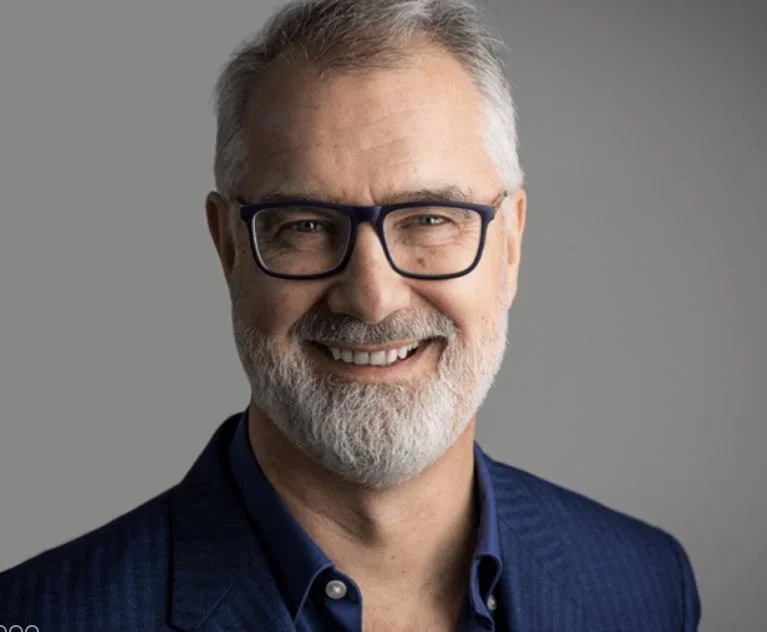
Julian Russell is a psychotherapist, executive coach, writer, and committed fellow traveller through the territories of inner work and public life. Drawing on decades of somatic and contemplative practice, he helps people access the capacities they already carry. He is a co-founder of the Generative Citizen community, a gathering of people who understand that how we are matters as much as what we do. His forthcoming book, Standing at the Edge of Hope, explores why personal and spiritual development is not a retreat from the world’s crises, but the very ground from which transformative engagement becomes possible.
Notes
(1) Eduardo Kohn, How Forests Think: Toward an Anthropology Beyond the Human (Berkeley: University of California Press, 2013).
(2) Steve Paxton, talk at Steve Paxton: Drafting Interior Techniques, Culturgest, Lisbon, 9 March 2019; excerpted in Contact Quarterly (2022). Paxton (1939–2024) was a founding figure of Contact Improvisation and a member of the Judson Dance Theater.
(3) James Finley, Turning to the Mystics (Albuquerque, NM: Center for Action and Contemplation, 2020–), audio series, https://cac.org/podcast/turning-to-the-mystics/.
(4) Anatácio Peralta, in The Eternal Song, directed by Zaya and Maurizio Benazzo (California: Science and Nonduality, 2024), film, \https://www.eternalsong.film\
(5) On the connection between frequency of return and habit formation, see James Clear, Atomic Habits (New York: Avery, 2018). See also Newsletter 4 of this series.